
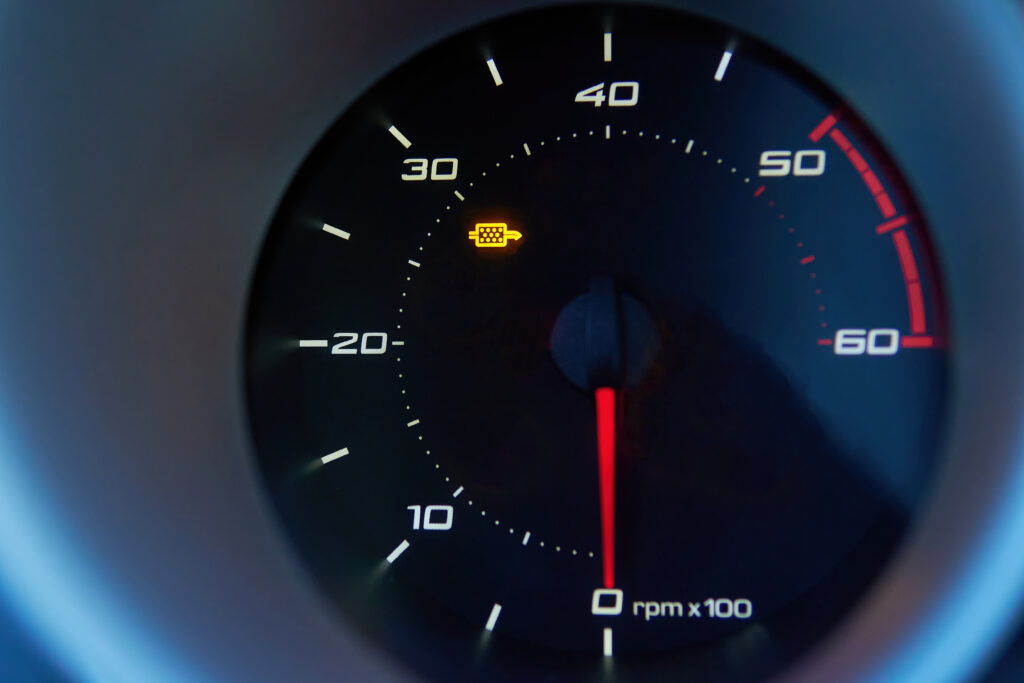
Your VW’s diesel particulate filter, or DPF, traps soot before it leaves the exhaust.
This reduces particulate emissions from your diesel engine, which is good news for everyone else in Derby, especially anyone driving behind you.
The filter periodically cleans itself through a process called regeneration. Basically, the engine management system raises the exhaust temperature so the trapped soot can burn away while you drive.
However, frequent short journeys and stop-start driving can prevent your exhaust from getting hot enough to complete this process. Soot then builds up inside the filter, causing the amber DPF warning light to appear.
The light doesn’t necessarily mean that your car’s DPF has failed. If it’s the only warning light showing, your VW may simply need an uninterrupted drive to regenerate the DPF.
What your DPF does (and why you need to look after it)
Your diesel particulate filter is a small part with a big job. It keeps your car’s emissions down and your engine running cleanly.
The trouble starts when the DPF gets blocked. Short journeys stop it reaching the temperature it needs to burn off the built-up soot. Over time, this can lead to a clogged filter and reduced engine performance.
A blocked DPF isn’t something to ignore. Left too long, it can cause your car to go into limp mode, cutting power to protect the engine, or lead to a costly repair bill further down the line.
The good news? Regular motorway drives, servicing on schedule and a quick check from our team can keep your DPF working as it should. So, if your DPF warning light has come on, book in with us and we’ll sort it before it becomes a bigger problem.
What should you do when the DPF light comes on?
First, check whether any other warning lights have appeared. You should also read the message on the dashboard and consult your VW’s handbook. If another fault light is showing, seek professional advice before attempting the drive. If a red warning light appears, stop as soon as it’s safe and contact roadside assistance. If only the amber DPF light is showing, Volkswagen recommends that you:
- If the low-fuel warning light is on, refuel.
- Drive somewhere you can maintain a steady speed safely, such as the A38 (on a lucky day).
- Maintain a speed of at least 40 mph. If you drive an automatic VW, Volkswagen advises selecting Sport mode.
- Keep the engine between 1,800 and 2,500 rpm. Higher revs won’t make the DPF clear any faster.
- Continue driving for at least 15 minutes. If the warning light goes out, the regeneration is complete. If the warning light doesn’t go out, continue reading below.
Always follow speed limits and adapt your driving to the road, traffic and weather. Don’t try to carry out a regeneration by revving the engine while parked. Without the load created by driving, this won’t usually produce the sustained conditions needed for regeneration.
If the light goes out during the drive, you can continue using your car as normal, remembering to include a longer drive at a steady speed every so often.
What if the DPF warning light stays on?
Stop trying to clear the light yourself if it stays on after the recommended drive. You should also seek professional help if another warning light appears, your VW loses power or the engine enters limp mode.
At this stage, continuing to drive could allow more soot to build up. A heavily blocked DPF may become harder to regenerate and could place extra strain on other parts of the engine and exhaust system.
Bring your VW to a specialist so that they can diagnose the cause. A technician will then check how blocked the DPF is, whether the pressure and temperature sensors are working and whether another engine or emissions fault caused the blockage. Cleaning the DPF alone won’t provide a lasting solution if an underlying fault caused the blockage. That fault needs to be fixed, too.
Depending on the test results, the technician may carry out a controlled regeneration using diagnostic equipment or recommend professional cleaning. If the DPF is damaged or can’t be restored, it may need replacing.
Does your DPF need replacing during a service?
Your DPF is a long-life component and should usually last for the life of the car. It isn’t normally replaced as part of routine servicing. However, high mileage, contamination, failed regenerations or another engine fault can sometimes mean that it needs professional cleaning or replacement.
Using the correct VW-approved engine oil and following your car’s service schedule will help protect the DPF. Regular servicing also gives your technician an opportunity to identify engine or emissions faults that could affect regeneration and lead to a clogged-up DPF.
Get your VW’s DPF checked
Don’t ignore a DPF warning light or keep attempting regeneration drives if it won’t clear. However, a persistent light doesn’t automatically mean you need a new DPF. As a Derby-based Volkswagen Group specialist, our team at Sunset VW understands the faults that can interrupt regeneration and keep the warning light on.
Get in touch with our friendly team to book a check. We’ll find out what’s happening and talk you through your options before carrying out any work.