
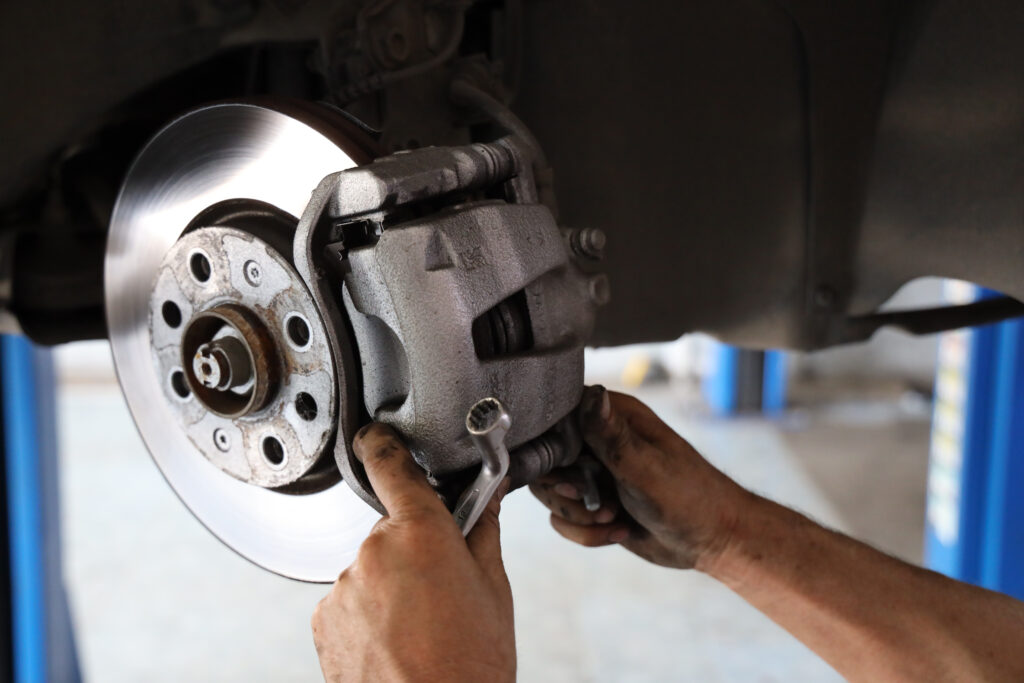
Your VW’s brakes are designed to wear. Every time you slow down, the brake pads and discs do the job they were built to do.
You can avoid some unnecessary wear with a few good driving habits. However, you don’t need to spend every journey worrying about your brakes or trying not to use them. Press the pedal whenever you need to. Your safety matters more than making a set of brake pads last a week or so longer than they might have otherwise.
If you drive through Derby each day, your brakes may wear sooner than those on a car that spends most of its time on the motorway. That’s completely normal. Keep your VW serviced, pay attention to any changes and replace worn parts when the time comes.
Use your brakes when you need them
Brake pads and discs are consumable parts. Like tyres and wiper blades, they won’t last for the life of your car. They wear because they’re working.
You shouldn’t avoid braking just to make them last longer. Don’t coast in neutral towards a junction or a roundabout, or delay braking when the road ahead tells you to slow down. Coasting can reduce your control and give you less time to react. It’s actually very dangerous.
Look ahead and leave enough space
When the road allows, smooth braking means slightly less wear on your pads and discs. It also makes the journey more comfortable for you and your passengers.
Look beyond the car in front and read the road. If there’s a bicycle or a tractor up ahead, or you notice brake lights coming on in the distance, ease off the accelerator. Leave plenty of time and space to react. This can reduce the need to brake hard at the last moment. Again, that doesn’t mean you should always brake lightly. If you need to stop, stop.
Don’t rest your foot on the brake pedal
Don’t left-foot brake. Once you’ve finished braking and you’re moving again, take your right foot off the pedal. Resting your left foot there may keep the pads in contact with the discs as you drive.
This creates heat and friction, wearing the discs and pads without reason. Instead, rest your left foot on the foot rest or on the carpet, ready to use the clutch (if you drive a manual).
Left-foot braking may also keep your brake lights on, which makes it harder for other drivers to tell when you’re slowing down.
Expect more wear in town
When you drive on the motorway, you don’t press the brake pedal as often, significant traffic jams aside.
On the other hand, a trip through town will almost certainly include traffic lights, roundabouts, junctions, crossings, pedestrians, cyclists and queues. You’ll use the brakes dozens of times over a few miles.
Regular city driving can therefore mean replacing the pads and discs much more often. So can hills, carrying heavy loads and towing. None of this means you’ve done anything wrong. It’s simply a normal part of driving.
There’s no single ‘brake replacement mileage’. We all drive differently. All that matters is a regular check (at your service and MOT) to stay aware of your brakes’ condition.
Remember that low-mileage brakes still need care
Low mileage doesn’t guarantee that your brakes will stay in good condition. Moisture can cause corrosion on the discs. Other brake components can begin to stick if your VW sits unused for long periods.
You may notice a thin orange coating on the discs after rain or after washing the car. This is often surface rust that clears as you use the brakes during a normal journey. However, if you start to notice a strange noise, vibration or pulling sensation, let a technician check it.
Hybrid and electric VWs can use regenerative braking to slow the car and recover energy. The electric motor acts as a generator, slowing the car without relying as much on the conventional brakes. However, the brake pads and discs still need regular inspections.
Let servicing handle the routine checks
You don’t need to measure your brake pads or take your entire wheel assembly apart before every journey.
During a routine VW service, a technician checks the brakes and looks for worn pads, scored or corroded discs, leaks and parts that aren’t moving as they should. Follow their advice. They’ll let you know if your brakes are fine, need cleaning or other maintenance or if it’s time for a replacement.
Your brake fluid also needs changing at the intervals set for your vehicle. It absorbs moisture over time, which lowers its boiling point and makes your brakes feel spongey and soft, especially under sustained braking. Following your VW’s service schedule takes care of this without giving you another job to remember.
An MOT includes brake checks, but it only confirms whether your car met the required minimum standard on the day of the test. So, for instance, your brake pads could be just about legal on the MOT date, but that means they’ll start dropping dangerously thin soon after. Routine servicing helps you monitor wear between MOTs.
Pay attention if something changes
You don’t need a degree in mechanical engineering to notice that your braking feels different. It’s your car. Trust your instincts. Tell us what you’ve noticed. We believe you. Book a brake check if you experience any of the following:
- A brake warning light that stays on
- Grinding, scraping or a squeal that doesn’t go away
- Vibration through the pedal or steering wheel when braking
- Your VW pulling to one side under braking
- A brake pedal that feels softer or travels further towards the floor than before
- A longer stopping distance
These won’t necessarily mean that you need new brakes, of course. Moisture, rust, grit and all sorts of other things can cause these symptoms. But it’s always better to be safe than sorry. Even if all it takes is a quick clean, you’ll know your brakes are working as they should.
If the brakes don’t respond as expected, or a red brake system warning stays on after you’ve released the handbrake, stop as soon as it’s safe and seek assistance. Don’t carry on and hope it clears. Again, it’s better to be safe than sorry.
Book a VW brake check in Derby
Sunset VW has worked on Volkswagen Group vehicles in Derby since 1986. Our Volkswagen-trained technicians have skills up to Master Technician level, supported by Volkswagen Group diagnostic equipment. We use genuine Volkswagen Group parts and explain what we’ve found before carrying out any repair on your vehicle.
If your VW’s brakes feel different, or you want us to conduct a more in-depth check on their condition during your next service, get in touch with us today. We’ll give you clear advice and explain what your car needs.