
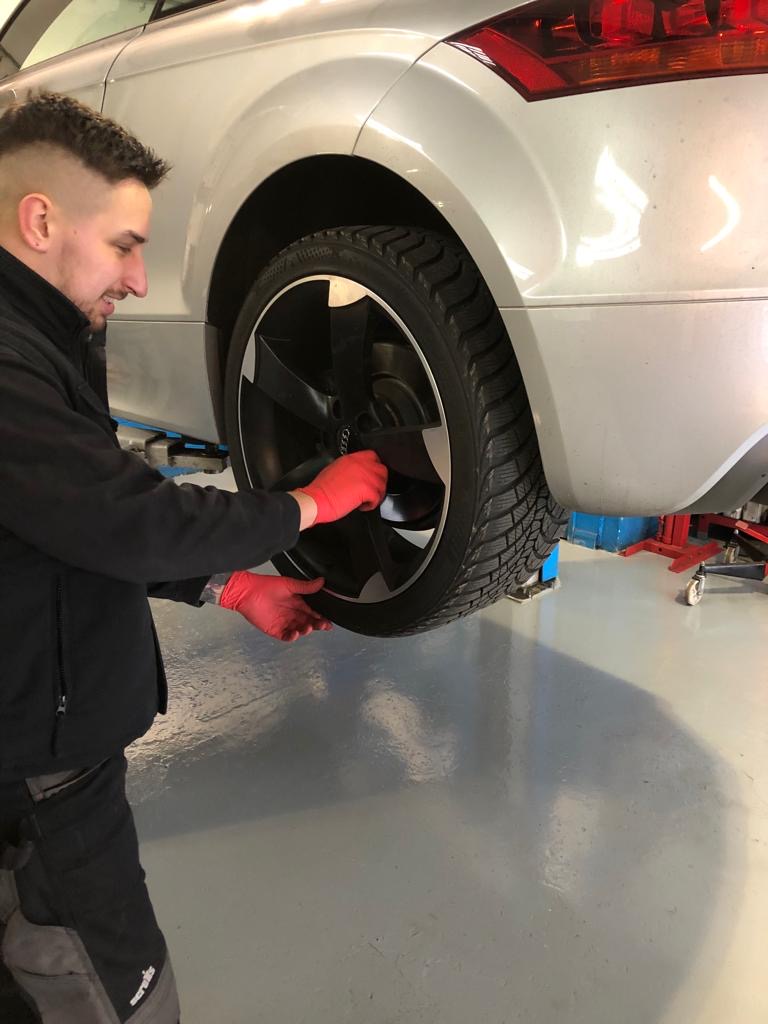
For many drivers, tyres are little more than an inconvenience. Most people spend very little time thinking about them. Until something goes wrong, of course.
Keeping your VW’s tyres at the correct pressure is one of the most straightforward vehicle tasks. Although many people fail to carry out this maintenance, getting it right makes or breaks your vehicle’s performance and safety. Here’s why it’s so important.
Finding the correct tyre pressure for your model
The first step is knowing the ideal tyre pressure for your vehicle. Every VW, Audi, Seat and Skoda model comes with a specific set of pressure values, usually found on a sticker inside the driver’s door frame (known as a ‘door jamb’, the vertical part of the frame) or in the vehicle manual.
You’ll notice different readings for specific situations like load and driving conditions. If you’ve got extra weight in the vehicle, or if you’re going on a long trip with a trailer, the tyre pressure might need adjusting.
How to check tyre pressure the right way
Checking your tyre pressure is a quick and simple job, but it’s important to get it right. The best time to do it is when the tyres are cold, so do it before driving or after the vehicle has been parked for a few hours. Use a reliable tyre pressure gauge and check all four tyres and the spare, if you have one.
The pressure should be set to the recommended value in your vehicle’s specifications. Don’t just guess or look at how the tyre feels. Also, don’t worry about the readings on the tyre wall itself – these aren’t related to your car.
Contrary to some poor advice, never fall into the trap of under-inflating (thinking it gives a softer ride) or over-inflating (to avoid frequent checks or to increase fuel economy). These are dangerous. Both mistakes mean you’ll replace your tyres much sooner and, worse, your car isn’t safe to drive.
The impact of incorrect tyre pressure on your VW
Under-inflated tyres increase rolling resistance, meaning your engine works harder to move the car. This means higher fuel consumption. You’re also more likely to experience uneven wear on the tyres, which means earlier replacements and more money spent. The wear pattern on an under-inflated tyre is worn-down tread on the offside and the nearside (left and right of the tread).
Over-inflated tyres, on the other hand, create a harsher ride and far less grip, especially in wet conditions. This makes handling more difficult and increases the risk of accidents. The tyre wear pattern is more concentrated (worn down) in the centre of the tread.
At Sunset VW, we see this regularly in our tyre centre. Vehicles running on under-inflated or over-inflated tyres face issues like decreased handling response, longer stopping distances and a rougher ride. The ultimate danger and highest point of concern is your safety. It doesn’t take long to ensure your tyres are at the correct pressure and top them up. It’s absolutely worth it.
VW’s Tyre Pressure Monitoring System
One feature in most modern VW, Audi, Seat and Skoda models is the Tyre Pressure Monitoring System (TPMS). This system should alert you when the tyre pressure drops below a certain threshold, making it easier to stay on top of tyre maintenance.
There are two types of TPMS: direct and indirect. Direct TPMS sensors deploy actual air pressure sensors in your tyre valves. Indirect TPMS uses ABS sensors to measure if the two wheels across an axle are turning at different speeds (indicating over- or under-inflation). Direct TPMS tends to be more accurate but more expensive to repair.
But don’t rely on it entirely. TPMS warnings are helpful but might not appear until after the issue has started affecting the vehicle’s performance and safety. It’s essential to regularly check the tyre pressure manually. When the TPMS light comes on, check your tyres immediately and correct the pressure if needed.
Weather and tyre pressure
It’s also important to be aware that weather changes impact your tyre pressure. As temperatures drop, the air inside the tyres contracts, leading to a reduction in pressure. Similarly, during hot weather, tyres expand, causing a rise in pressure.
A simple change in weather can lead to significant differences in how your tyres perform. It’s a good idea to check your tyre pressure before and after long trips, especially when the forecast calls for a change in weather. Also, bear in mind that as you drive, your tyres warm up, and the pressure inside them increases.
The importance of a regular maintenance schedule
At Sunset VW, we recommend adding tyre pressure checks to your regular vehicle maintenance schedule. Once a week should be plenty. Of course, if you notice other problems in the meantime, don’t hesitate to get them checked out by a trusted technician.
Maintaining the correct tyre pressure is VW a vital part of keeping your business on the road. It improves fuel efficiency, extends the life of your tyres and ensures better handling for safer driving.
At Sunset VW, we’re Derby’s local, family-friendly experts in tyre maintenance. We know how to keep your tyres in top condition and thus prevent serious issues down the line. Our team sees hundreds of tyres weekly and knows how to spot early signs of wear or damage. We’ll tell you if we uncover any problems and advise you on a puncture repair or a new tyre. Don’t wait for the unexpected. Book a tyre check with us today.